
Neptune
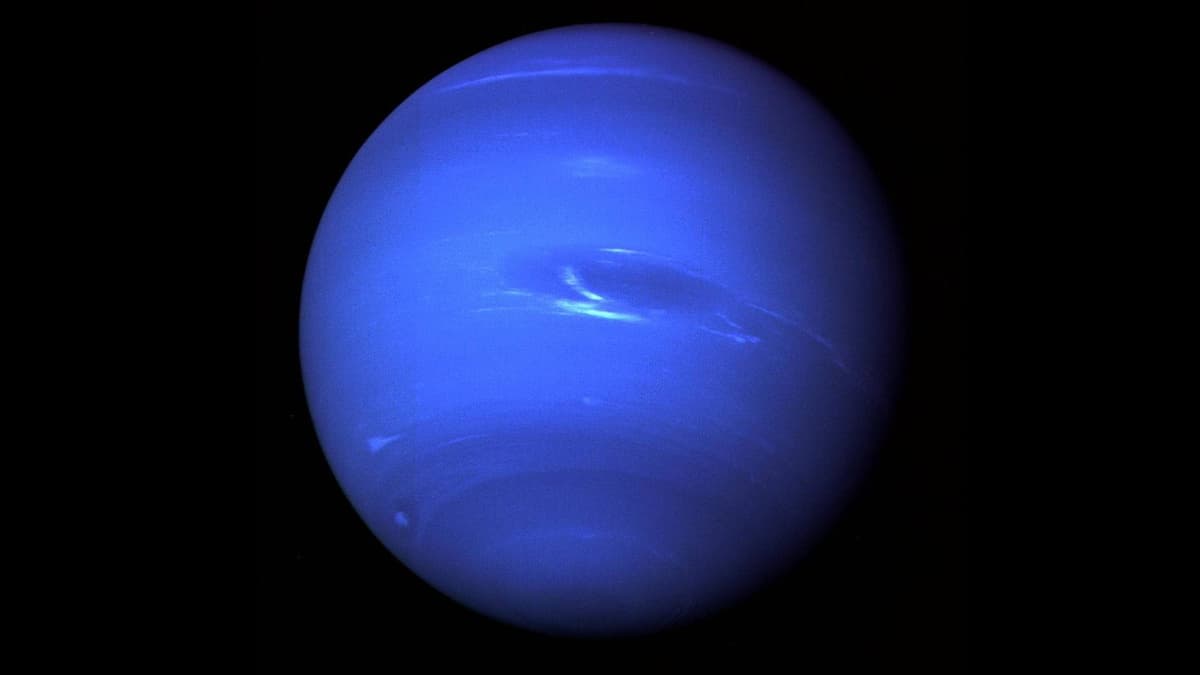
Neptune is the eighth and farthest planet from the Sun. Like Uranus, it is an ice giant, composed mainly of water, ammonia, and methane beneath a thick atmosphere of hydrogen and helium. Methane gives Neptune its deep blue color, even richer than Uranus’s. Because of its great distance from the Sun, Neptune receives very little sunlight.

Key Characteristics of Neptune
Neptune is primarily composed of water, ammonia, and methane. The presence of methane in its atmosphere absorbs red light and reflects blue, giving the planet its striking appearance.
- Average distance from Sun: 4.5 billion km
- Diametr 49k kilometrs
- Length of a year: 165 Earth years
- Average temperature: −214°C
Neptune’s Atmosphere and Weather
Neptune has the strongest winds in the Solar System, reaching speeds of over 2,100 km/h. Massive storms, including the famous Great Dark Spot, have been observed by space probes.
“Neptune remains one of the least explored planets, holding many mysteries beneath its icy clouds.”
Neptune was discovered in 1846 and is often described as a dynamic and extreme planet.
Scientists continue to study its atmosphere to better understand ice giant formation and
the evolution of distant planetary systems. Learn more from the official
Uranus - the coldest planet in solar system



Related Articles